Extended Reality for Vehicles - TimeLine.
timeline
    title Extended Reality Development for Vehicles
    section 2021
      Oct : Meta & BMW partnership
    section 2022
      Nov : HoloRide & Audi
    section 2023
      May : Meta & BMW Quest Working In A Moving Car
      Oct : BMW metaverse
    section 2024
      Jan : Apple Vision Pro (Travel Mode)
      May : Meta Travel Mode
      Aug : DeepMirror Car XR update
Detailed TimeLine:
- 2021 Oct : Meta & BMW announced a partnership on XR-in-car problem. 1
- Problem of Non-inertial reference frame: cameras and Imu are in conflict.
- 2022 Nov : HoloRide €700 kit, contains HTC’s ultra-compact Vive Flow headset and a wireless gamepad (€50) 2. youtube video.
- Technology (3DOF + Canbus + recenter):
- using only IMU for giving 3DOF movement (rotation only).
- need user interface to recenter the screen (to driving direction).
- (Audi only) uses the car’s real steering, accelerating, and braking as virtual movement.
- Technology (3DOF + Canbus + recenter):
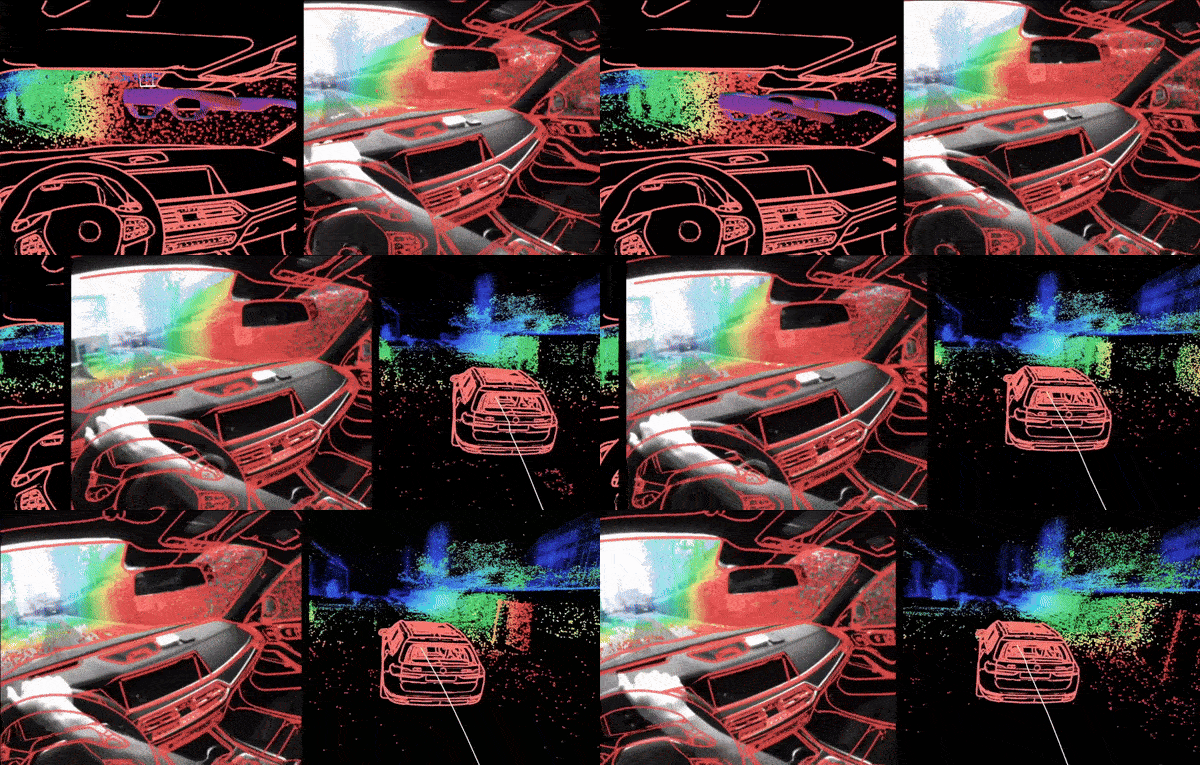
- 2023 May : Meta & BMW Quest Working In A Moving Car 3 4.
- collaborated with BMW to incorporate IMU data from a BMW car’s sensor array in real time into the tracking system of XR devices.
- Next step : add the car’s location relative to the world, using the car’s precise 6DOF positioning system.
- not yet ready for customers.
- 2023 Oct : BMW metaverse 5.
- 2024 Jan : Apple Vision Pro 6 Travel Mode.
- Cannot work properly on moving vehicles.
- 2024 May : Meta Travel Mode with 6DOF7. It enables Quest to run in a moving car (where AVP’s travel mode failed to work).
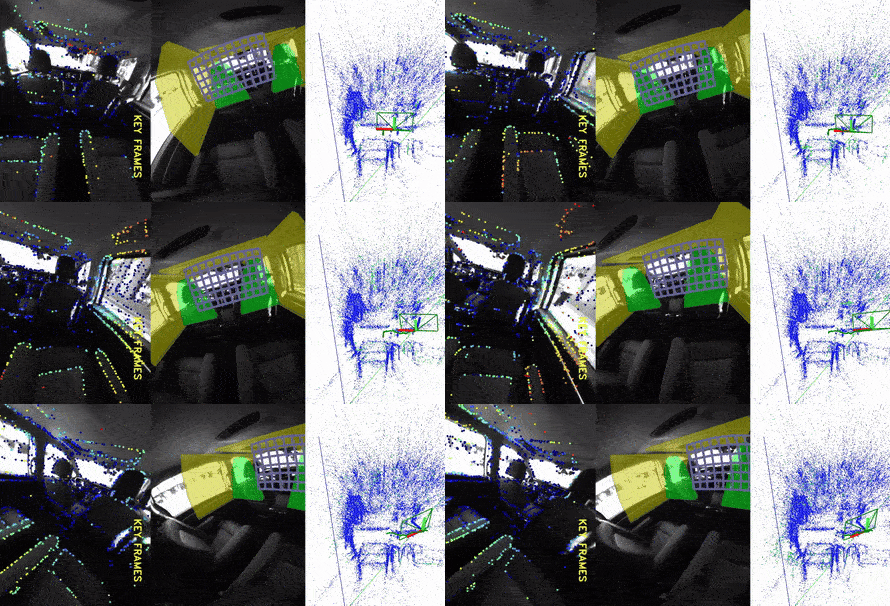
- 2024 Aug : MOKUKU’s Car XR incar-6dof offering 6dof w.r.t. both car and world.
MOKUKU’s Development Path
- Achieved full 6DOF tracking relative to both the car and the external world.
- Developed faster than Meta in implementing real-world car-relative VR, despite fewer resources.
- Combines vision-based SLAM with in-car sensor fusion for precise, smooth tracking.
- Enables immersive in-car experiences, such as virtual pets, interactive dual-display animations, and passenger-aware VR content.
MOKUKU demonstrates that it is possible to provide stable, high-quality XR experiences in moving vehicles. By leveraging vision-based SLAM and creative in-car interactions, it not only solves technical challenges but also opens the door for new forms of passenger engagement.
Future of VR in Moving Cars: Feasibility and Market Potential
Here’s a careful, structured analysis of the future of VR in moving cars, considering technology, market, and user acceptance:
Future of VR in Moving Cars
- Technical: VR in moving cars is possible today and will improve rapidly.
- Content & Adoption: Applications exist but are currently limited; success depends on short, engaging, safe experiences.
- Market: Early adoption likely in premium vehicles, gaming, or family markets. Broader consumer adoption depends on autonomous vehicle growth and compelling content.
- Overall: The idea can sell, but the VR experience must be tailored to passenger comfort, motion safety, and engaging content rather than mimicking traditional home VR games.
1. Technological Feasibility
- 6DOF Tracking & Vision-Based SLAM:
- Current solutions (like MOKUKU) demonstrate that precise 6DOF tracking relative to both the car and the world is achievable.
- Vision-based SLAM + sensor fusion overcomes issues like non-inertial reference frames and vehicle vibrations.
- Hardware Constraints:
- Headsets need to be lightweight, untethered, and safe in moving vehicles.
- Low-latency streaming and motion compensation are critical to prevent motion sickness.
- Future Outlook:
- With continued improvements in VR headset comfort, real-time tracking, and car-integrated sensors, VR in moving vehicles is technically viable for mass adoption in the next 3–5 years.
2. Potential Applications
- Entertainment:
- Gaming, virtual theme parks, interactive stories, and virtual pets (like MOKUKU).
- Immersive travel experiences (e.g., virtually flying over cities while the car drives).
- Education & Productivity:
- Children’s educational VR content during long commutes.
- Remote collaboration or “office” VR environments for passengers.
- Wellness & Fitness:
- Light exercise or mindfulness experiences that passengers can safely perform while seated.
- Marketing & Commercial:
- XR ads or branded virtual experiences integrated into the vehicle experience.
Limitation: Apps must be short, safe, and adaptable to unpredictable vehicle motion. Long, complex VR games are less feasible.
3. User Acceptance
- Pros:
- Passengers gain entertainment during commutes, reducing boredom.
- Gamified systems (virtual pets, interactive worlds) can create repeat engagement.
- VR experiences may become a differentiator in premium vehicles.
- Cons:
- Motion sickness is a real barrier for many users.
- VR in cars currently requires learning and trust (users may worry about discomfort or motion sickness).
- Social norms: passengers may prefer shared screen or AR experiences over fully immersive VR.
Prediction: Early adopters and younger audiences are likely to embrace it. Mass adoption may require short, interactive, low-risk experiences rather than full-length VR games.
- Current Market:
- Limited; Holoride shows some traction in Europe, Meta Travel Mode experiments, and Apple Vision Pro demonstrates interest.
- Growth Potential:
- Tied to autonomous vehicles—as driving becomes less attention-demanding, passenger-focused VR becomes more appealing.
- Luxury and family vehicle segments are the first adopters.
- Challenges:
- Content availability and ecosystem development. Without compelling apps, VR adoption stalls.
- Integration with vehicle sensors and safety regulations.
References:
-
German Audi Owners Can Now Buy An In-Car VR System With Vive Flow ↩
-
Meta & BMW Got A Quest Pro’s Mixed Reality Working In A Moving Car ↩
-
World premiere: BMW Group inspires gamers with first Car Creator in Fortnite ↩
-
Quest 2 & Quest 3 Get Experimental Travel Mode To Make Positional Tracking Work On Airplanes. ↩