MOKUKU is more than just a VR/AR system—it’s a complete interactive platform inside vehicles. To bring our AI-driven, passenger-focused experiences to life, we designed a modular, robust, and high-performance hardware stack. In this post, we’ll dive into the key components and architecture that make MOKUKU possible.
1. Core Processing: ESP32 Controllers
At the heart of MOKUKU are ESP32-based microcontrollers, chosen for their:
- Low power consumption
- Built-in Wi-Fi and Bluetooth
- Real-time control for displays, sensors, and audio
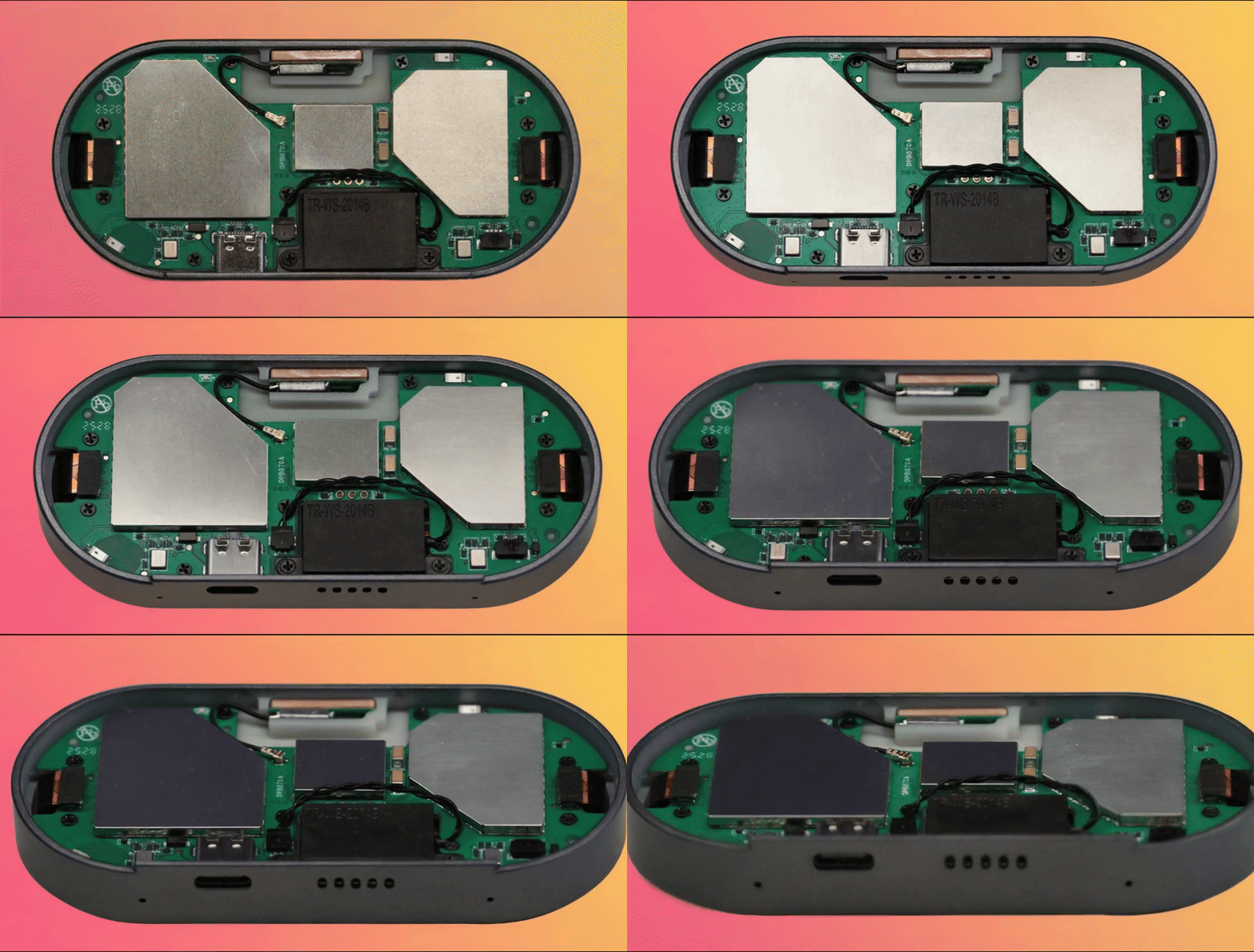
ESP32 handles:
- Reading CAN bus and OBD-II vehicle data
- Driving animations and interactive displays
- Audio input/output control
- Communication with AI servers for passenger interaction
We also explored ESP32-C3 variants to handle specialized tasks, ensuring smooth integration with sensors and VR tracking systems.
2. Visual Display System: Dual Circular Screens
MOKUKU’s “face” is two independent circular displays:
- Left & Right displays: Can show dynamic expressions, vehicle info, or interactive content.
- Animation playback: Supports sequence-frame animations from SD cards for rich visuals.
- Independent or combined mode: Can display separate info or form a cohesive animated face.
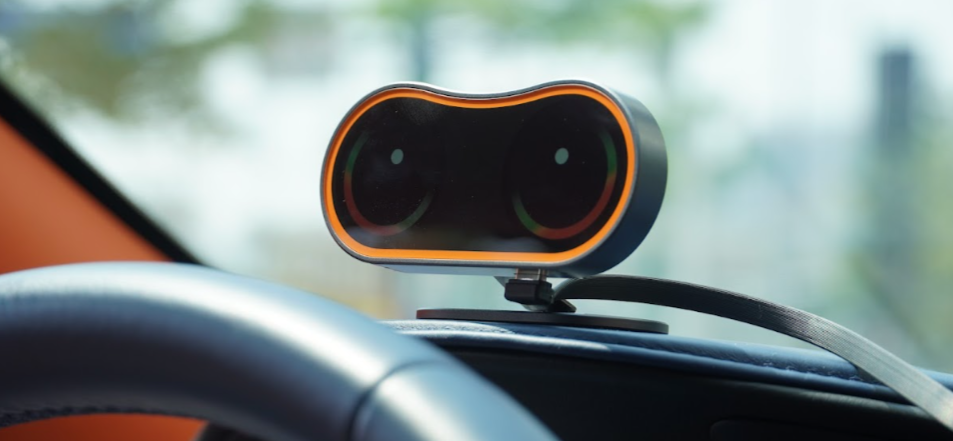
This display system allows us to blend vehicle telemetry with playful interactions, creating a unique passenger experience.
3. Audio System: Talking and Listening
Sound is key to immersion. MOKUKU uses:
- ICS-43434 Digital Microphone for high-quality voice input.
- ES8311 Audio Codec for stereo sound output (speakers or headphones).
- WebSocket streaming: Sends audio to AI servers in real-time for responsive conversations.
This enables voice commands, AI conversation, and auditory feedback to passengers while driving.
4. Vehicle Data Integration
To make experiences responsive to real-world movement, MOKUKU taps into the vehicle:
- CAN bus / OBD-II sensors: Speed, RPM, acceleration, braking, and steering inputs.
- IMU / Gyroscope data: Enhances VR/AR 6DOF tracking.
This lets our system react to driving conditions, enabling virtual pets to move, animations to adjust, and VR environments to match car motion.
5. Media Management & Expansion
MOKUKU is designed for modular content management:
- SD Card storage: Holds animations, VR assets, and configuration files.
- Web-based interface: Upload, organize, and manage media without physically removing SD cards.
- Extensibility: Hardware allows adding sensors, cameras, or new displays as the system evolves.
6. Summary
The hardware behind MOKUKU is a careful balance of:
- Real-time control (ESP32)
- Immersive visuals (dual displays + VR)
- Responsive audio (mic + codec + AI)
- Vehicle integration (CAN/OBD/IMU)
This foundation enables interactive, passenger-centric experiences—from virtual pets and gamified content to full VR/AR in-car adventures.