MOKUKU supports two equally capable connection options: OBD Version and GPS Version. The OBD Version reads vehicle data through the car’s OBD-II port, which can provide signals such as speed, RPM, and other driving-fuel information. However, because OBD-II protocols vary across car brands, model years, regions, and vehicle platforms, some cars may not fully support MOKUKU’s OBD system. For users whose vehicles are not compatible with OBD, the GPS Version offers an equally complete MOKUKU experience by using motion and positioning data instead of vehicle diagnostic data. Both versions are designed to deliver the same core value: expressive driving reactions, emotional companionship, journey awareness, and a lively in-car electronic pet experience.
Let’s break down.
1. A Quick History of OBD-II
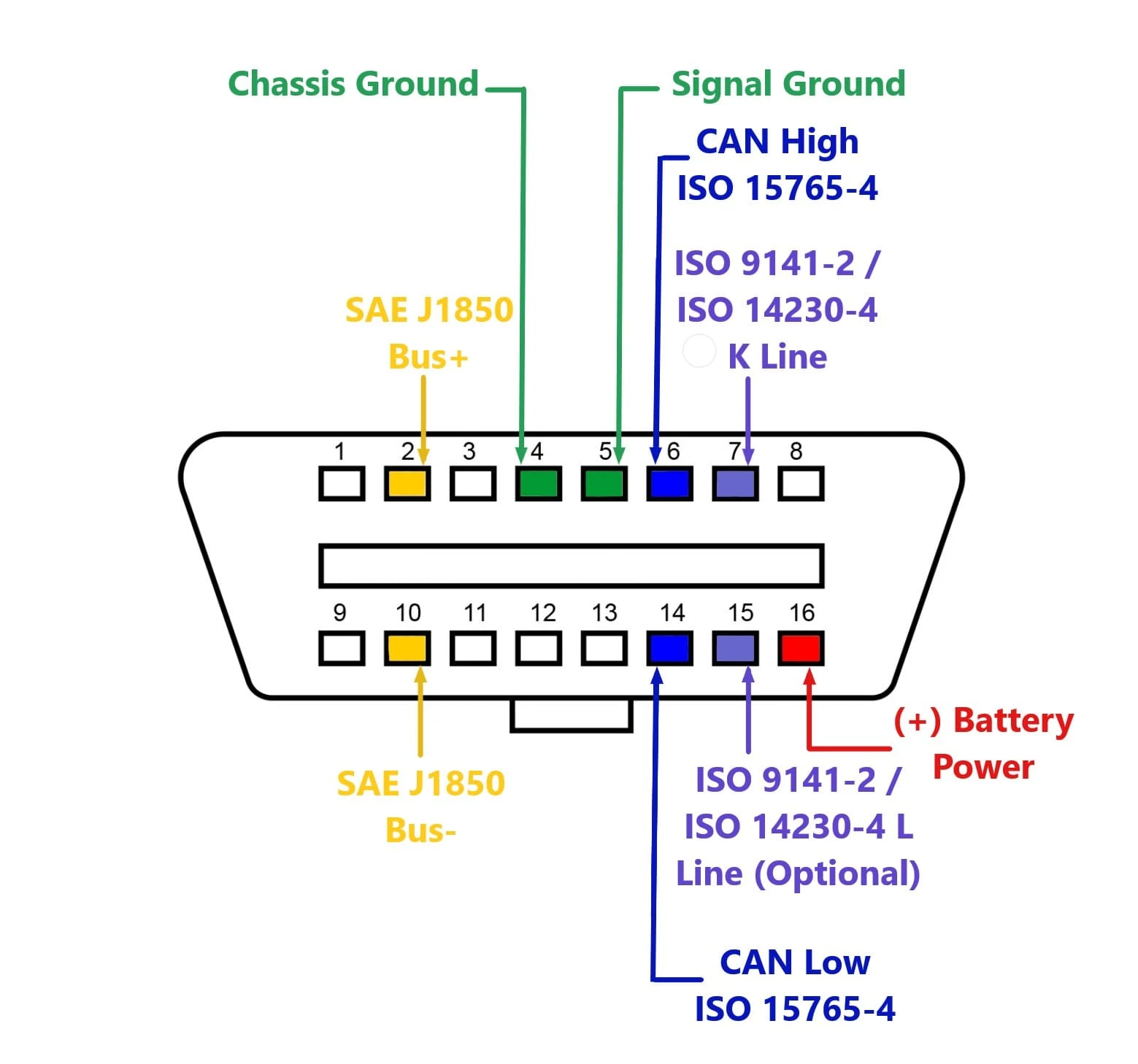
OBD-II (On-Board Diagnostics II) was introduced in the 1990s as a standardized diagnostic interface for vehicles. Its original purpose was not entertainment, not apps, and definitely not real-time UX—it was:
- Emissions monitoring
- Fault detection
- Regulatory compliance
Key characteristics:
- A standard physical port (16-pin connector)
- A set of standardized diagnostic protocols
- Access to fault codes (DTCs) and limited sensor data
Over time, developers realized that, we can read real-time vehicle data from here. And that’s how OBD-based apps, dongles, and dashboards became popular. But this was never the original design goal.
2. CAN Bus: The Nervous System of Traditional Cars
Inside almost every internal combustion vehicle, communication is powered by CAN Bus (Controller Area Network). Think of CAN as: A shared communication highway where ECUs (Electronic Control Units) broadcast messages. Typical signals on CAN: Vehicle speed, Engine RPM, Steering angle, Brake status...
And importantly: Many of these signals are continuously broadcasted, which makes passive listening possible. This is why OBD-II tools can often “see” live data—they’re really just tapping into CAN.
3. Why OBD-II Compatibility Can Still Vary
Although OBD-II is called a “standard,” the reality is more complicated. OBD-II standardized the physical connector and basic diagnostic access, but it did not make every vehicle communicate in exactly the same way. Different manufacturers, model years, regions, and vehicle platforms may use different protocols, data formats, or signal definitions. Common OBD-II communication protocols include:
- CAN
- ISO 9141-2
- ISO 14230 KWP2000
- SAE J1850 PWM
- SAE J1850 VPW
For newer vehicles, CAN is the most common protocol. However, older cars, imported cars, regional models, and some special vehicle platforms may behave differently. Even when a car has a 16-pin OBD port, it does not always mean that every real-time signal can be read in the same way. Some vehicles only expose limited diagnostic data. Some require manufacturer-specific commands. Some may not continuously broadcast the data that MOKUKU needs for real-time reactions. This means there is a possibility that your vehicle may not fully support our OBD version.
MOKUKU uses OBD-II data to create expressive driving reactions, such as acceleration, braking, turning, speed changes, RPM movement, and other vehicle-motion-based emotions. To keep the product stable and responsive, we currently support a defined OBD-II data method. We are not able to adapt and test every vehicle model, protocol, and manufacturer-specific system. Before choosing the OBD version, we strongly recommend checking whether your car supports standard OBD-II communication and whether basic live data such as speed and RPM can be read properly.
In short: A car may have an OBD port, but it may still not be fully compatible with MOKUKU’s OBD system.
Why EVs Move Away from CAN (for External Access)
CAN still exists—but:
- It’s often segmented into multiple internal networks
- Protected behind gateway ECUs
- Not exposed externally
Reasons include: Security (prevent hacking / unauthorized control); Safety certification; Data ownership & monetization; System complexity management.
4. Switching from OBD Version to GPS Version
If your vehicle does not work well with our OBD version, we also provide a way to change your device from the OBD version to the GPS version.
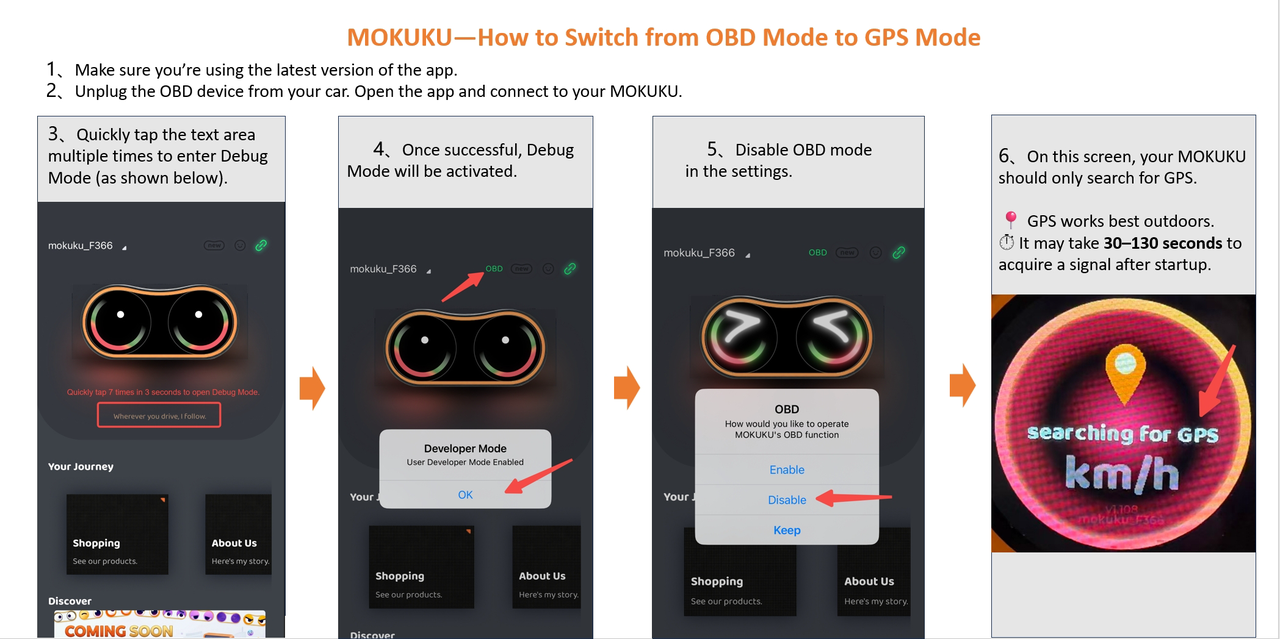
The GPS version does not rely on the vehicle’s OBD-II protocol. Instead, it uses positioning and motion data to support core driving-related features. This makes it more suitable for vehicles with unsupported OBD protocols, older cars, or cars where OBD data is limited or unstable. By switching to the GPS version, you can still keep many of MOKUKU’s main experiences, including:
- Speed-based reactions
- Acceleration and braking feeling
- Journey movement awareness
- Driving companion animations
- Basic trip-related experience
- Most emotional interaction features
Some OBD-specific data, such as engine RPM, fuel level, or detailed vehicle sensor readings, may no longer be available after switching to GPS mode. However, the core personality, emotional companion experience, and motion-reactive behavior of MOKUKU can still remain.
5. We Are Expanding OBD Compatibility
Our engineers are continuously working to support more vehicle models and improve OBD compatibility. However, the OBD ecosystem is highly fragmented. Different brands, model years, regions, and vehicle platforms may use different communication protocols or expose vehicle data in different ways.
To make MOKUKU work reliably, we need to test and verify real vehicles, not just read protocol documents. Some car models are difficult to purchase or access in our local market, which means compatibility testing can take more time and resources. We will keep improving support step by step, while also providing the GPS Version as an equally capable option for users whose cars are not yet supported by our OBD system.